
University of Nairobi Scholar Selected to Present Research at Prestigious United Nations AI Conference in Geneva
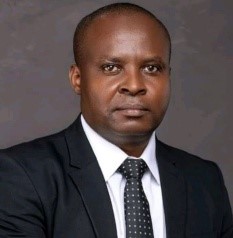
Barack Ogada
Nairobi, Kenya – Barrack Ogada, a Master of Arts in Political Science candidate at the Department of Political Science and Public Administration, Faculty of Arts and Social Science, University of Nairobi, has been selected to present his research at the 2026 Global Conference on Artificial Intelligence, Security and Ethics (AISE26), a premier international forum organized by the United Nations Institute for Disarmament Research (UNIDIR) in Geneva, Switzerland.
Ogada's paper, titled “Sovereignty Under Code: AI Infrastructure Dependence and the Reconfiguration of Security Decision-Making in Africa,” was selected from an exceptionally competitive pool of submissions from around the world. According to UNIDIR, the conference received 735 abstracts from 89 countries, nearly three times the number submitted to the inaugural conference the previous year.
The selection places Ogada among a distinguished group of scholars, policymakers, technology experts, and security practitioners who will convene in Geneva on 18–19 June 2026 to explore the rapidly evolving intersection of artificial intelligence, security, governance, and ethics.
In a communication confirming the selection, UNIDIR noted that both the institute and its international review panel were highly impressed by the proposal and expressed strong interest in showcasing the research during the conference's lightning talk sessions, which will be delivered in person and livestreamed to a global audience.
The selected paper examines how Africa's growing dependence on externally owned artificial intelligence infrastructure is reshaping national security decision-making processes across the continent. As governments increasingly adopt AI-powered systems for surveillance, intelligence analysis, border management, and public security, the study raises important questions about technological dependence, digital sovereignty, accountability, and strategic autonomy.
The research argues that while AI technologies offer significant opportunities to improve governance and security outcomes, excessive reliance on foreign-controlled digital infrastructure may create new vulnerabilities that undermine African states' ability to formulate and implement security decisions independently. Through a political science lens, the study contributes to emerging global debates on computational sovereignty, algorithmic governance, and the future of state power in the digital age.
Speaking on the significance of the selection, Ogada described the opportunity as both a personal milestone and a recognition of the quality of scholarship emerging from African institutions.
"Being selected by UNIDIR from such a large and highly competitive international field is deeply humbling. It demonstrates that African perspectives are increasingly shaping global conversations on artificial intelligence, security, and governance. I am honored to represent the University of Nairobi and Kenya at a forum that brings together leading thinkers and practitioners from around the world."
The achievement reflects the University of Nairobi's growing contribution to international research on contemporary global challenges. As artificial intelligence continues to transform societies, economies, and political systems, scholars from the Global South are playing an increasingly important role in ensuring that discussions on technology governance incorporate diverse perspectives and experiences.
Ogada's academic journey is itself a remarkable story of resilience and determination. Having overcome significant socio-economic challenges to pursue higher education, he graduated with First Class Honours in Political Science and Sociology from the University of Nairobi and is currently completing his Master's degree in Political Science. His research interests focus on governance, security studies, public policy, democratic legitimacy, and the political implications of emerging technologies.
The invitation to present at AISE26 further strengthens the University of Nairobi's visibility within international academic and policy circles and underscores the institution's commitment to producing research that addresses pressing global issues.
As preparations continue for the conference in Geneva, Ogada hopes the presentation will stimulate broader discussions on how African countries can build indigenous technological capacity, strengthen digital sovereignty, and participate more effectively in shaping the future governance of artificial intelligence.
The Global Conference on Artificial Intelligence, Security and Ethics (AISE26) is expected to attract leading experts from governments, international organizations, academia, civil society, and the private sector, making it one of the most influential global gatherings on AI governance and security policy.
For the University of Nairobi, the selection serves as another testament to the institution's tradition of academic excellence and its growing influence in shaping international policy debates on emerging technologies and global governance.

